Sandstone vs Bluestone Pavers: Heat, Grip, Look and Cost
Bluestone (basalt) is dark, hard and dense; sandstone is warm, lighter and easier to cut. How they compare for heat, grip, staining and style.
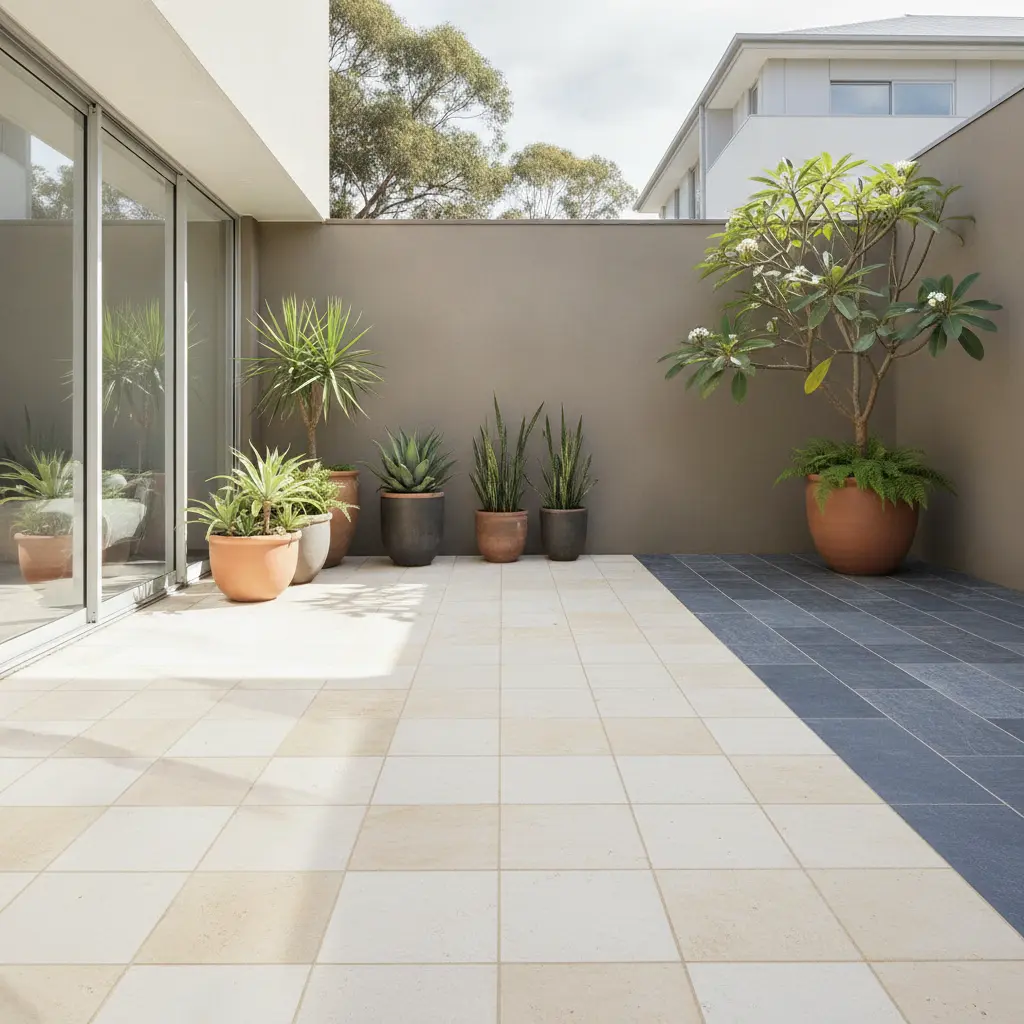
The short answer
Choose bluestone if you want a dark grey, contemporary look and a very hard, dense paver for high wear, and the area is shaded or you accept that dark stone gets hot in full sun. Choose sandstone if the paving is in full sun around a pool or used barefoot, you want warm tones that suit Sydney’s sandstone and brick houses, or you need thicker pavers cut to size locally. Either way, pick a textured finish for grip outdoors.
Which option suits which project
Sandstone
Best for: Sunny pool surrounds, barefoot areas and homes with warm or heritage tones
View sandstoneBluestone (basalt)
Best for: Contemporary dark-grey paving in shaded or high-wear areas
Side-by-side comparison
| Sandstone | Bluestone (basalt) | |
|---|---|---|
| What it is | Sedimentary: quartz sand grains naturally cemented | Basalt, a fine-grained volcanic rock (in Australia) |
| Colour | White, cream, yellow, gold, brown, orange and purple | Blue-grey to charcoal; textured finishes look lighter |
| Typical formats | 50mm pavers, 30mm tiles, flagging, coping, 75–100mm for driveways | Commonly 20–30mm pavers and coping; setts; thicker to order |
| Density | About 2,300kg/m³; 50mm is about 115kg/m² | Roughly 2,800–3,000kg/m³; heavier at the same thickness |
| Hardness | Moderate; cuts, bullnoses and rockfaces easily | Very hard and abrasion-resistant; slower to cut |
| Heat underfoot | Pale colours stay comfortable in full sun | Dark stone absorbs heat; can be too hot barefoot |
| Slip when wet | Sandblasted gives the most grip; sawn is reliable | Sandblasted or bush-hammered for grip; honed is smoother |
| Porosity and sealing | Porous; seal and reseal every 2–3 years outdoors | Less porous; sealing still advised against stains and salt |
| What stains show | Dark marks such as leaf tannin and oil show on pale stone | Hides dirt; shows white salt, efflorescence and scuffs |
| Style | Warm; heritage to contemporary; matches Sydney sandstone | Cool and crisp; contemporary, or Melbourne heritage |
| Supply | Quarried and cut to size at Glenorie | Victorian quarries plus a lot of imported basalt |
| Cost (relative) | Guide prices from $65/m² to $120/m², stone only | Varies by origin and finish; compare quotes at equal thickness |
| Best uses | Pools, patios, paths, driveways, crazy paving, heritage work | Modern courtyards, entries, shaded areas, commercial paving |
Sandstone prices are Stone Front guide prices for stone only, ex-quarry at Glenorie. Stone Front does not sell bluestone; densities are typical published ranges for basalt.
What is bluestone?
In Australia, bluestone almost always means basalt: a dark, fine-grained volcanic rock formed when lava cooled quickly at or near the surface. Victorian bluestone, quarried in western Victoria, built much of colonial Melbourne’s lanes, kerbs and buildings, and that heritage is why the name stuck. Much of the bluestone paving sold today is imported basalt cut into pavers, tiles, coping and setts.
Bluestone pavers are most often sold 20–30mm thick in rectangular and square formats, with matching pool coping, step treads and drop-face pieces, plus cobbles and setts for driveways and edges. At those thicknesses they are bedded in mortar or adhesive on a concrete slab. Sandstone is sold in a wider spread of thicknesses: 30mm outdoor tiles for slabs, 50mm pavers for a compacted base, and 75mm or 100mm for driveways, alongside flagging for crazy paving.
The name means different rocks elsewhere. In the United States, bluestone is a blue-grey sandstone; in Ireland and Belgium it is a blue-grey limestone. If you are comparing products, ask the supplier which rock you are actually buying, because basalt, sandstone and limestone behave very differently. Victorian basalt often shows small gas holes, sometimes called cat’s paws, which are part of its character rather than a defect.
Is bluestone hotter than sandstone?
Yes, in full sun dark bluestone gets noticeably hotter than pale sandstone, because dark surfaces absorb more of the sun’s energy and light surfaces reflect more of it. On a summer afternoon, charcoal paving can be uncomfortable or too hot for bare feet, which matters most around pools, play areas and anywhere people walk without shoes. Pale sandstone, such as Marbled White, White with Greys or Light Yellow, stays comfortable; darker sandstone in browns and purples warms up more, but still far less than charcoal stone.
If you love the look of bluestone and the area is sunny, use it where shoes are worn, under a pergola or in shade, or as a border, step nosing or banding around a pale field of sandstone. Keep the barefoot zone, especially the pool surround, in a light stone. The sandstone pool pavers page covers sizes and finishes for wet areas.
Which has better grip when wet?
The finish decides grip more than the rock does, so compare finishes rather than stones. Both can be cut with a sawn face, ground smooth (honed) or textured, and the textured finishes are the ones for outdoor wet areas.
| Finish | Sandstone | Bluestone (basalt) |
|---|---|---|
| Sandblasted | The most slip-resistant sandstone finish; pools, ramps, commercial | Textured; lightens the colour to a mid grey |
| Sawn | Flat with fine saw marks; reliable grip for paving and step tops | Flat sawn face; check grip before using in wet areas |
| Honed | Smooth and matte; indoors and covered areas | Smooth, dark and sleek; less grip when wet |
| Bush-hammered or split | Hydrasplit and handsplit natural faces | Bush-hammered or split faces for texture |
For any paver going around a pool, on a ramp or at an entry, ask for its wet slip rating. In Australia this is usually a pendulum P-rating under AS 4586, where a higher P-number means more grip. See sandstone finishes for how each finish looks and where it suits.
How hard and heavy is bluestone compared with sandstone?
Basalt is much harder and denser than sandstone, typically around 2,800–3,000kg per cubic metre against about 2,300kg for sandstone. That hardness is why bluestone resists abrasion in busy commercial areas and keeps sharp arrises. It also makes bluestone slower and harder to cut, drill, bullnose or rockface on site, so custom shapes take longer and wear blades faster.
Sandstone is the easier stone to shape. Stone Front cuts pavers, treads, capping, coping and edging to size at the Glenorie quarry with square, bullnose, pencil-round or chamfer edges, and 50mm sandstone paving weighs about 115kg per square metre. Sandstone pavers at 50mm can be laid on a compacted crushed sandstone or road base with a bedding layer, while thin 20–30mm bluestone usually needs a slab.
Does bluestone or sandstone show stains more?
Each hides different marks. Pale sandstone shows dark stains, such as tannin from wet leaves, barbecue fat and rust rings from furniture, until it is sealed and cleaned. Dark bluestone hides dirt and dark spills, but shows the opposite: white efflorescence leaching from mortar beds, salt crust around salt-water pools, hard-water marks and pale scuffs on honed surfaces. Sealing both with a penetrating sealer makes spills easier to lift. The sandstone sealing guide explains sealer types, and an enhancing sealer will darken either stone if you want a richer colour.
Which suits a heritage or a contemporary home?
For a Sydney heritage house, sandstone is the natural match: it is the same family of stone as many of the city’s Victorian terraces, Federation foundations, retaining walls and front steps. Bluestone reads as a Melbourne heritage material, so in Sydney it usually looks contemporary. It suits rendered houses, black window frames, concrete and steel, and crisp, linear layouts.
Sandstone can also look modern. Large-format sawn all round pavers in a single colour such as Marbled White, laid in stack bond with tight joints, give a clean contemporary result, while handsplit flagging or sawn flagging gives a traditional one. The colour guide shows the ten Glenorie colours.
Crazy paving shows the difference clearly. Bluestone crazy paving is a dark, even patchwork that looks graphic and modern. Sandstone crazy paving, in sawn flagging from $85/m² guide price or handsplit flagging in 10m² pallets, mixes whites, yellows, browns and purples for a relaxed, garden feel that suits older houses and bush settings. See sandstone crazy paving for both types.
Get a sandstone paving quote
Tell Stone Front the product, area and your suburb through the sandstone paver quote form and you will usually get a reply the same business day. If you are weighing up bluestone too, compare quotes at the same thickness and finish and include the base each one needs.
Frequently Asked Questions
Can bluestone and sandstone be used together?
Yes, and the contrast can look sharp. Common combinations are a pale sandstone field with a bluestone border or banding, bluestone step nosings on sandstone steps, or sandstone walls behind bluestone paving. Keep the darker stone out of full-sun barefoot areas and seal both before grouting so mortar does not stain the pale stone.
Will a sealer darken bluestone or sandstone?
It depends on the sealer. A natural-look penetrating sealer leaves either stone close to its dry colour, while a colour-enhancing sealer darkens and enriches it, much like the stone looks when wet. Test any sealer on an offcut first and let it cure before deciding.
Is bluestone good for driveways?
Basalt is hard and wears well under traffic, but thin bluestone pavers need a reinforced slab under cars. Sandstone driveways use 75mm pavers minimum for cars and 100mm for heavier vehicles or steep driveways, on 150–200mm of compacted road base or a reinforced slab.
Which is easier to lay yourself?
Sandstone is generally easier for a capable DIYer. It is lighter for its thickness, cuts with a standard diamond blade, and 50mm pavers can go on a compacted base with bedding sand. Bluestone is heavier and harder to cut, and thin pavers are normally bedded in mortar on a slab.
Is bluestone more expensive than sandstone?
It depends on origin, thickness and finish, so compare written quotes for the same size and thickness. Sandstone from Stone Front starts from $65/m² for sawn modular paving and $120/m² for sawn all round pavers, guide prices for stone only, ex-quarry. Include base, laying and sealing when comparing.