Sandstone Pool Coping Guide: Profiles, Pavers and Ideas
Coping profiles compared, paver sizes and finishes for wet areas, which colours stay cooler, falls away from the pool and sealing for salt-water pools.
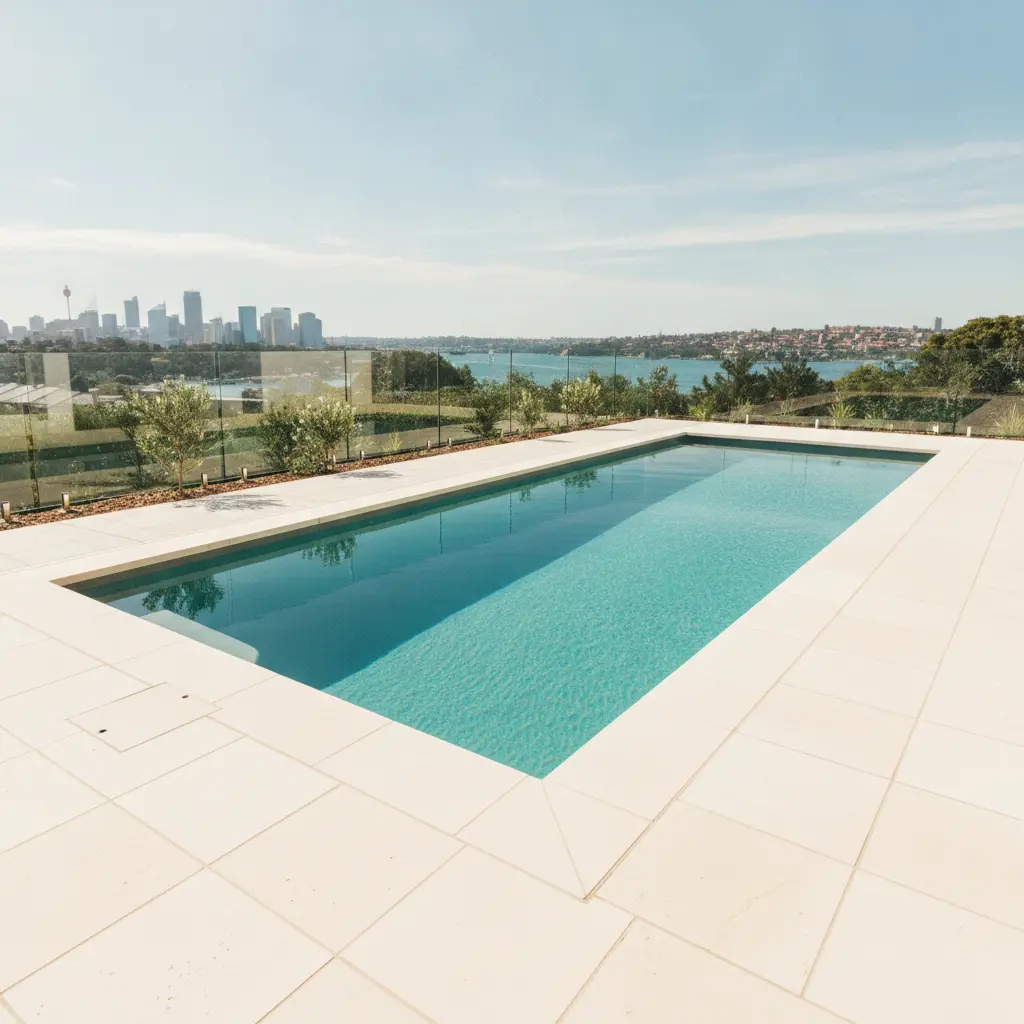
Sandstone pool coping is the edge stone that caps the top of the pool shell; sandstone pool pavers form the surround behind it. Most Sydney pools use coping cut to size with a square, pencil-round, bullnose or drop-face edge, matched to outdoor tiles or sawn all round pavers (commonly 50mm thick) in a grippy finish. The surround should fall away from the water and be sealed with a penetrating sealer.
- Coping: cut to size to suit your pool’s shape and edge profile (custom, by quote).
- Pavers: 50mm thick sawn all round pavers in 400x400, 600x400 and 600x600mm, from $120/m² (guide price).
- Tiles: outdoor sandstone tiles from 300x300 to 600x600mm, from $110/m² (guide price).
- Heat: lighter colours such as Marbled White, White with Greys and Light Yellow stay cooler underfoot.
- Care: seal with a penetrating sealer suited to salt-water pools and reseal about every 2–3 years.
What is pool coping, and how is it different from pool pavers?
Coping is the row of stone that sits on top of the pool wall (the bond beam) and usually overhangs the water slightly. It is the stone swimmers hold, sit on and see from inside the pool, so its edge profile matters. Pool pavers are everything behind it: the surround, apron or terrace. In most sandstone pools the coping and the pavers come from the same colour batch, so the edge reads as part of the paving rather than a separate trim.
Because pools are rarely perfectly square, coping is cut to size. Straight runs use long rectangular pieces; curves and freeform pools need tapered pieces cut to the radius; corners are mitred or cut as a single return piece. Send your pool builder’s plan with your quote request so the pieces can be cut to fit.
Pool coping profiles compared
| Profile | What it looks like | How it feels | Suits |
|---|---|---|---|
| Square (sawn edge) | Crisp, sharp line; edge lightly eased (arrised) | Clean but firmer on hands and legs | Contemporary pools, flush or minimal designs |
| Pencil round | Edge rounded to a small radius | Comfortable to sit on and grip | Most pools; a safe all-rounder |
| Bullnose | Fully rounded, half-round front edge | Smoothest for swimmers | Traditional and family pools |
| Drop-face (rebated) | A deeper face on the pool side, so the coping looks thicker than the paving | Chunky, solid edge | Contemporary and heritage pools, raised pool walls, spas |
A drop-face edge is either cut from thicker stone and rebated underneath or built up along the front edge, depending on the design. All four profiles are custom stonemasonry pieces, made to order and priced by quote.
How thick should sandstone pool coping be?
Coping is commonly the same thickness as the paving behind it, so the two sit flush. Sawn all round pavers are 50mm thick for foot traffic (75 or 100mm where vehicles drive), and outdoor tiles are laid on a mortar bed over a slab. If you want the edge to look heavier without making the whole terrace thicker, a drop-face profile gives the look of a much thicker slab at the waterline. Your pool builder will set the exact overhang over the water and the bedding detail on the bond beam.
Which sandstone finish and colour suit a pool?
Is sandstone slippery around a pool?
Our tiles come in sawn, honed, natural split and sandblasted finishes. For wet, barefoot areas, a sawn, sandblasted or natural split face gives more grip than a honed face, which is smooth and better suited to indoor floors. Slip resistance of paving is classified under Australian Standard AS 4586; if your builder, certifier or a body corporate specifies a wet slip rating, ask for test data for the exact stone and finish before you order.
Edge profile helps too. A rounded pencil or bullnose edge is easier on swimmers climbing out, and a slightly textured coping top is easier to sit on when wet.
Does sandstone get hot around a pool?
All paving warms up in Sydney sun, but colour makes a big difference. Lighter stone reflects more sunlight, so Marbled White, White with Greys and Light Yellow stay noticeably cooler underfoot than Browns, Orange or Purples. If the pool is in full afternoon sun, choose from the lighter end of the quarry run and keep darker or banded colours for shaded areas or walls.
Colour batches can be matched from photos, or you can visit the Glenorie quarry and hand-select from the bins (Mon–Fri 7:00am–3:30pm, Sat 8:00am–midday).
Sandstone pool paving options: tiles, pavers or crazy paving?
| Option | Guide price | Sizes and specs | Look |
|---|---|---|---|
| Outdoor sandstone tiles | From $110/m² | 300x300 to 600x600mm and custom; sawn, honed, natural split or sandblasted | Neat, modern grid on a slab |
| Sawn all round pavers | From $120/m² | Diamond-sawn six sides, 50mm thick; 400x400, 600x400, 600x600mm or cut to size; with or without mortar joints | Formal surrounds with tight joints |
| Sawn flagging (crazy paving) | From $85/m² | Irregular pieces with diamond-sawn edges, 50/75/100mm thick, mixed colours | Relaxed, resort or bushland feel |
| Coping and custom edges | By quote | Cut to size; square, pencil round, bullnose or drop-face | Matches either surround |
A popular combination is a crazy-paved surround with straight sawn coping: the coping gives a clean line at the water, and the flagging relaxes the rest of the terrace. Final pricing depends on quantity, finish and delivery.
Which way should pool paving fall?
The surround should fall away from the pool. Rain and splash water carry leaves, soil, sunscreen and garden fertiliser, and you don’t want any of it draining back into the water. A fall of around 1:100 (10mm per metre) is a commonly used minimum for paving, directed to garden beds, a strip drain or another drainage point. The coping itself is set level along its length, often with a slight fall away from the water. Your pool builder or landscaper sets the final levels; make sure the falls don’t send water towards the house or a neighbour’s boundary.
Keep the pool barrier in mind when planning planters, steps, retaining walls, boulders or bench seats near the fence. NSW pool barrier rules restrict climbable objects close to the fence, so check the current requirements with your certifier or council before you build.
Sealing sandstone around a salt-water pool
Salt water soaks into porous stone, and as it dries, salt crystals form inside the pores and can make the surface flake over time. Seal coping and pavers with a penetrating sealer rated for salt-water pools, ideally sealing the underside and edges of coping before it is laid. Rinse the surround with fresh water now and then, keep concentrated pool chemicals off the stone, and never use acid cleaners. Our guide to sealing sandstone walks through products, application and resealing.
Sandstone pool coping ideas
- One-colour terrace: coping and pavers from the same batch of Marbled White or Light Yellow for a calm, cool surround.
- Contrast band: coping in a slightly lighter or darker batch than the paving to frame the water.
- Raised wall with drop-face coping: a 450mm-high pool or spa wall capped with wide coping doubles as built-in seating.
- Crazy paving with a sawn edge: sawn flagging across the terrace, finished with straight sawn coping at the water.
- Sandstone steps into the garden: bullnosed treads cut from the same stone carry the pool level down to the lawn.
- Wall cladding on the pool fence wall or water feature: ties the vertical surfaces to the paving.
Get sandstone pool coping and pavers from Stone Front
We quarry, saw and cut pool coping and pavers to size at Glenorie and deliver across greater Sydney, including by crane truck for tight backyards. See our sandstone pool pavers page for colours and stock, then send your pool plan for a free quote on coping and paving.
Frequently Asked Questions
How much does sandstone pool paving cost?
Guide prices are from $110/m² for outdoor sandstone tiles, from $120/m² for sawn all round pavers and from $85/m² for sawn flagging (crazy paving). Coping cut to size with a bullnose, pencil-round or drop-face edge is priced by quote. Final pricing depends on quantity, finish and delivery, and installation is quoted separately by your paver or pool builder.
Can you replace the coping on an existing pool with sandstone?
Usually, yes. In a pool renovation the old coping is removed and new sandstone coping is cut to the pool’s shape and bedded onto the existing bond beam. Have your pool builder check the condition of the beam first, and send them the coping dimensions so the overhang and edge profile suit the pool.
Is sandstone suitable for salt-water pools?
Yes, provided it is sealed and looked after. Seal coping and pavers with a penetrating sealer rated for salt-water pools, rinse the surround with fresh water from time to time and reseal about every 2–3 years. Unsealed sandstone can absorb salt, which crystallises in the pores and can make the surface flake over time.
What are sandstone pool pavers laid on?
Outdoor sandstone tiles are laid on a mortar bed over a concrete slab. Sawn all round pavers are 50mm thick and can be laid with or without mortar joints; around pools most installers bed them on mortar over concrete for a stable, level surround. Your pool builder or paver will specify the base for your site.
Can I choose the colour of my pool coping in person?
Yes. You can visit our Glenorie quarry and hand-select from the bins Monday to Friday 7:00am–3:30pm and Saturday 8:00am–midday. If you can’t visit, colour batches can be matched from photos of existing stone or a look you like.
Products Mentioned in This Article
Sandstone Tiles (Outdoor)
Precision-cut outdoor tiles for patios, pool areas and alfresco spaces.
Sawn All Round Pavers
Diamond-sawn on all sides for a formal, elegant finish.
Custom Stonemasonry
Bespoke sandstone pieces: bullnosing, caps, benches, letterboxes and more.
Sawn Flagging (Crazy Paving)
Natural irregular shapes with sawn edges for a classic, informal look.