Sandstone Wall Capping: Sizes, Overhang, Edge Profiles and Fixing
How wide and thick sandstone capping should be, how much overhang to allow, square, chamfer and bullnose edges, pier caps, seat-wall capping and how to fix it.
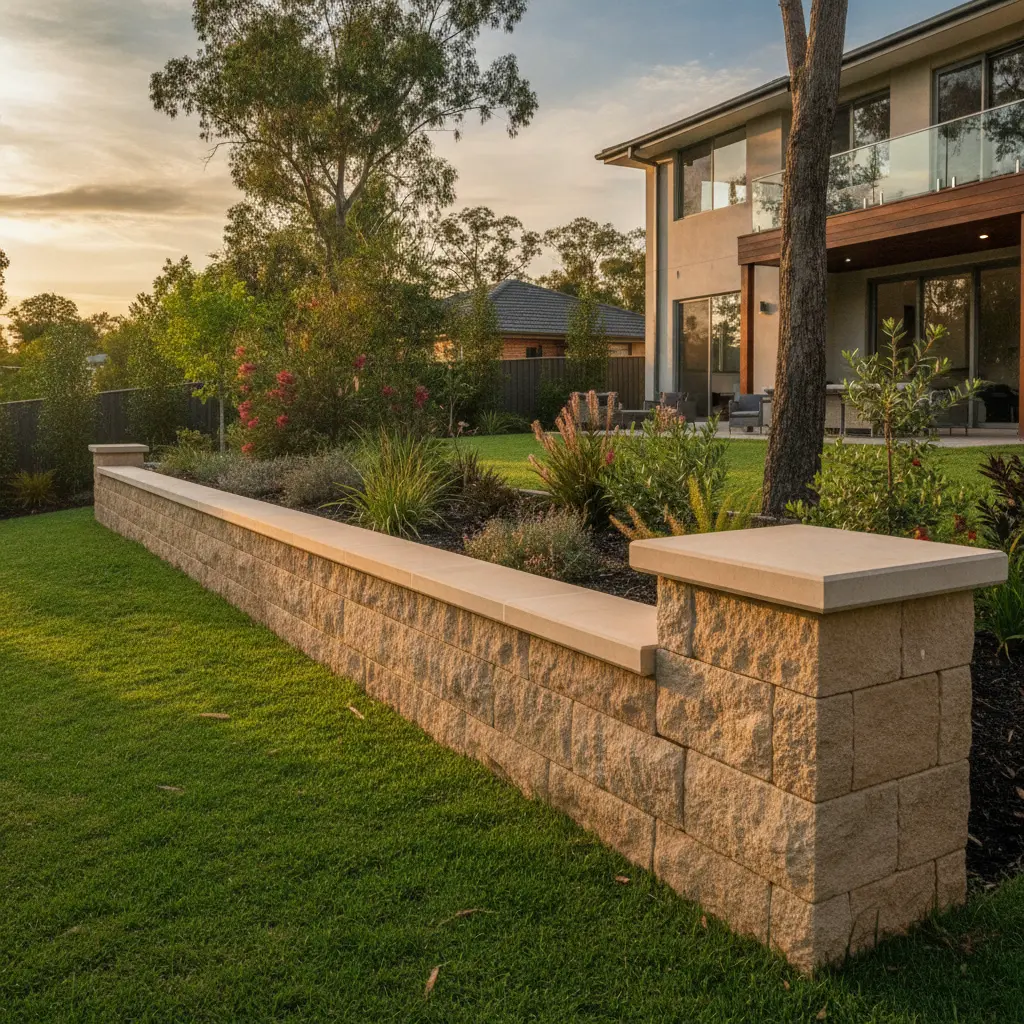
Sandstone wall capping is a sawn slab, usually 30–50mm thick, cut to the width of the wall plus an overhang of about 20–30mm on each side so it sheds water and casts a shadow line. A 230mm brick wall takes capping about 280mm wide and a 350mm cavity wall about 400mm. Choose a square, chamfered or bullnose edge, or rough split-top capping for dry-stacked walls. Capping is cut at the quarry and priced by quote by the lineal metre.
- Thickness: 30–50mm for wall capping; 50–75mm for pier caps.
- Width: wall width plus about 20–30mm overhang each side.
- Edges: square, chamfer, bullnose or pencil-round; rough split-top for rustic walls.
- Fixing: bedded on mortar or fixed with a stone-suitable construction adhesive.
- Ordering: lineal metres of wall, wall width, plus the number of corners and piers.
What size should sandstone capping be?
Start with the width of the wall, then add the overhang on both sides. Common combinations:
| Wall type | Wall width | Capping width (about 25mm overhang a side) | Typical thickness |
|---|---|---|---|
| Sandstone block wall, 110mm bed | 110mm | About 160mm | 30–50mm |
| Sandstone block wall, 130mm bed | 130mm | About 180mm | 30–50mm |
| Single-brick wall | 230mm | About 280mm | 30–50mm |
| Cavity or double wall | 350mm | About 400mm | 30–50mm |
| Split log wall | About 300mm | About 350mm, or leave the log top exposed | 30–50mm |
| Brick or block pier | Pier size | Pier plus overhang on all four sides | 50–75mm |
Capping widths are calculated from the wall width; standard cut widths include 230, 350, 400 and 500mm, and any width can be cut to order. Measure your actual wall, including any render or cladding, because cladding adds to the width. On sandstone-clad walls, capping also protects the top edge of the cladding from water staining.
How much should capping overhang?
About 20–30mm on each side. The overhang throws rainwater clear of the wall face so it does not run down and stain the stone or render, and it gives the wall a neat shadow line. Less than that and water tracks down the face; much more and the overhang looks heavy on a narrow wall and is more easily chipped.
Which edge profile should I choose?
- Square: clean and contemporary; suits rendered walls and modern sandstone blocks.
- Chamfer: a 45° bevel that softens the edge while staying crisp; common on pier caps.
- Bullnose: a full half-round, comfortable to sit on; suits seat walls, raised garden beds and walls beside pools.
- Pencil-round: a small radius that takes the sharpness off a square edge.
- Rough split-top: a natural split surface for dry-stacked walls and bushland gardens.
The face can be sawn, honed or sandblasted. Sawn suits most outdoor capping; honed suits covered areas and benchtops. Our sandstone finishes page compares them.
What about pier caps and pyramid caps?
Pier caps finish brick, block and sandstone piers on fences, gates and entries. They are thicker than wall capping, about 50–75mm, and are cut to the pier size plus overhang on all four sides, with a chamfered or bullnose edge. Pyramid caps, with a raised, sloping top, are a traditional stonemasonry item; simple pieces like these take about 1–2 weeks to make. Our guide to sandstone benches, letterboxes and pillars covers pier and letterbox details.
Can capping turn a wall into a seat?
Yes. A low retaining or garden wall built to about 450mm high and finished with wide capping makes built-in seating. A single 110mm skin of blocks is too narrow to sit on comfortably, so seat walls are usually built thicker or topped with capping wide enough to sit on, often with a bullnose front edge. Sawn sandstone capping on a gabion wall makes a smooth seat on a rugged base. For hydrasplit-faced designs, hydrasplit paving strips at 50mm, from $95/m², can be used as capping that matches the paving.
How do you fix sandstone capping?
- Check the wall top is level and clean. Fill low spots and remove loose mortar.
- Dry-lay the capping along the wall to check joints, overhang and the position of corners and piers.
- Bed each piece on mortar, or fix it with a construction adhesive suited to stone, following the product instructions.
- Keep joints even and set each piece to a string line so the overhang is consistent.
- Point or fill the joints, then clean off any mortar before it dries on the face.
- Seal once the stone is clean and fully dry.
On a retaining wall, keep drainage behind the wall clear and do not let the capping trap water on top of the wall. Our step-by-step guide to building a sandstone block retaining wall covers the courses below the capping, and how to seal sandstone covers sealer choice, including colour-enhancing sealers that suit capping.
Which capping suits which wall?
- Sandstone block retaining walls: sawn capping with a square or bullnose edge gives a flat top for pots and sitting; rough split-top capping suits dry-stacked rough squared blocks.
- Brick and rendered fences: sawn capping with a square or chamfered edge, cut to the wall width with mitred corners and matching pier caps.
- Sandstone-clad walls: capping wide enough to cover the cladding and overhang it, so water does not run down behind the veneer.
- Raised garden beds: bullnose capping, comfortable to sit on and kind to hands while gardening.
- Gabion walls: a sawn cap over the basket for seating around a fire pit or entertaining area.
- Walls beside pools: sandblasted or sawn capping with a bullnose edge, sealed with a sealer rated for salt and chlorine, to match the coping.
How much capping do I need?
- Measure the total run of wall in lineal metres.
- Measure the wall width, including any cladding or render.
- Count external and internal corners; corners can be mitred.
- Count piers and measure each one.
- Note any curves; radius pieces are cut to a template.
Send those five numbers and Stone Front can quote the capping as a cutting list, so the pieces arrive ready to lay rather than being trimmed on site. Our sandstone cut to size guide explains how to write one.
How much does sandstone capping cost?
Capping and pier caps are priced by quote, by the lineal metre or per piece, because width, thickness, edge profile and corners vary from wall to wall. Sawn sandstone edging, which overlaps with narrow capping, starts from $35 per lineal metre, guide price, ex-quarry. Price rises with width and thickness and with profiled edges such as bullnose.
Get your quote from Stone Front
Stone Front saws capping, coping and pier caps at its Glenorie quarry from the same stone as its blocks and pavers, so the colours match. Get an exact quote from Stone Front: tell us the product, quantity and your suburb at stonefront.com.au/get-a-quote and we usually reply the same business day. Include the wall length, width, corners and piers. See our edging, capping and pool coping page for the range.
Frequently Asked Questions
How thick should sandstone wall capping be?
Sandstone wall capping is usually 30–50mm thick. Pier caps are thicker, around 50–75mm, because they are bigger pieces and more exposed. Wide seat-wall capping is normally at the thicker end of the range.
How much should capping overhang a wall?
Allow about 20–30mm on each side. The overhang throws rainwater clear of the wall face and gives a shadow line. A 230mm single-brick wall takes capping about 280mm wide and a 350mm cavity wall about 400mm.
How do you fix sandstone capping?
Bed capping on mortar or fix it with a construction adhesive suited to stone, keeping joints between pieces even. On dry-stacked garden walls, heavier rough split-top capping can be bedded in mortar on the top course. Seal sawn capping so food, leaves and drinks do not stain it.
Can sandstone capping be cut to fit my wall?
Yes. Capping is sawn at the quarry to the exact width of your wall, in lengths to suit, including mitred corners, pier caps and radius pieces for curved walls. Send the wall width, run length and the number of corners and piers.
Which edge profile suits sandstone capping?
Square edges suit contemporary walls, chamfered edges give a crisp bevel, and bullnose edges are comfortable on seat walls and raised beds. Rough split-top capping suits rustic dry-stacked walls.
Products Mentioned in This Article
Custom Stonemasonry
Bespoke sandstone pieces: bullnosing, caps, benches, letterboxes and more.
Sandstone Edging
Define garden beds, pathways and driveways with natural sandstone edging.
Hydrasplit Paving
Split-face finish paving strips for a contemporary, structured look.
Rockfaced Blocks
Traditional rockfaced finish blocks for walls, edging and complete homes.